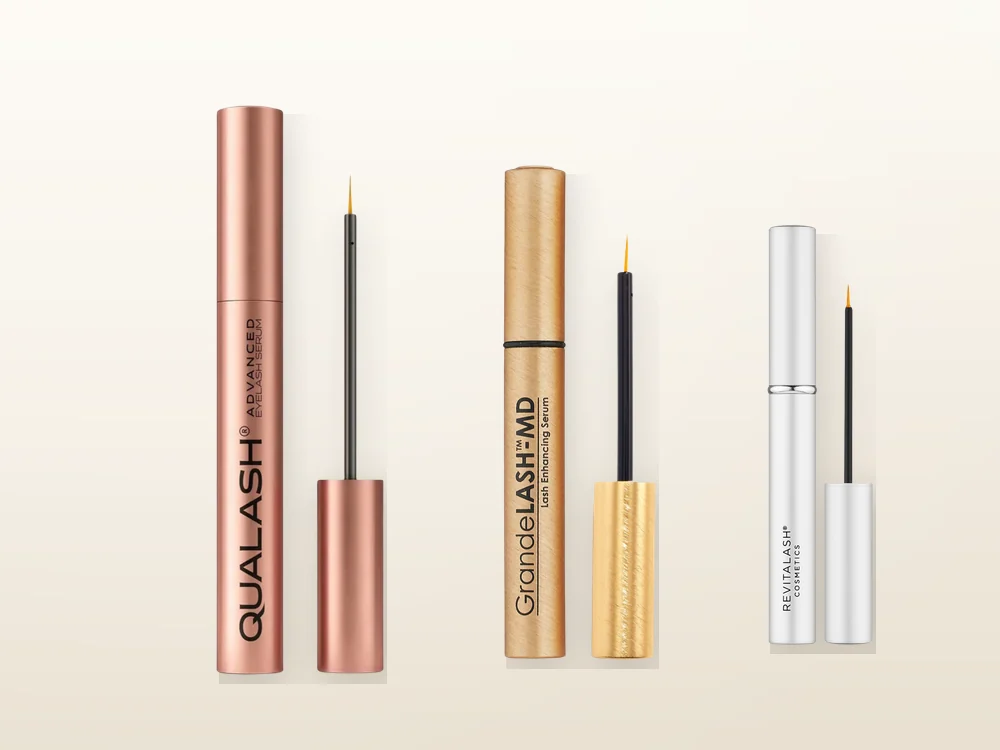
- Yes — but what ‘work’ means depends entirely on the mechanism in the bottle.
- Prostaglandin analogs extend the active growth phase of the lash cycle and produce visible length in four to eight weeks.
- Peptide serums strengthen the lash shaft and follicle anchoring, so fewer lashes break or shed early — fuller lashes over 8–12 weeks.
- No cosmetic serum creates new follicles, and none of them changes anything permanently. Results fade over two to three months after stopping.
“Do lash serums work?” is one of those questions where both the enthusiastic yes and the cynical no are wrong in the same way: they treat the whole category as one thing. It isn’t. Two products sitting next to each other on a shelf, at similar prices, in similar packaging, can be doing biologically unrelated things to your lashes. Understanding which one you are holding is most of the answer.
The lash growth cycle, briefly
Every eyelash follicle moves through three stages. Anagen is the active growth phase, lasting roughly four to ten weeks, during which the lash actually lengthens. Catagen is a short transitional phase where growth stops. Telogen is the resting phase, after which the lash sheds and the follicle starts again. On the scalp, anagen can last years — which is why head hair grows long. On the lash line it lasts weeks, which is why lashes have a natural maximum length.
Two consequences follow, and they explain almost every confusing thing about lash serums. First, your lashes are not synchronised: at any moment they are scattered across all three phases, so any change arrives gradually and unevenly rather than all at once. Second, the ceiling on lash length is set by how long anagen lasts. That is the lever a serum can pull — or fail to pull.
What prostaglandin analogs do
This is the mechanism that made the whole category exist. Prostaglandin analogs — isopropyl cloprostenate in cosmetics, bimatoprost as a prescription drug — extend the anagen phase. A follicle that would have stopped growing at week six keeps going. The lash ends up longer, and because more follicles are simultaneously in an active phase, the lash line also looks denser.
The discovery was accidental. Glaucoma patients using prostaglandin eye drops kept growing conspicuously long lashes, which is how bimatoprost ended up being developed as Latisse®, still the only product FDA-approved to treat eyelash hypotrichosis. Cosmetic manufacturers subsequently adopted structurally related compounds that could be sold without a prescription.
So: does it work? Unambiguously yes. It is the most reliable route to visible length available without a prescription. The literature that documents that efficacy also documents the cost — conjunctival redness, periorbital skin darkening, and in a minority of long-term users iris pigmentation change and orbital fat atrophy, the last two of which do not reliably reverse. We cover this properly in the side-effects guide.
What peptides do
Peptide serums attack the problem from the other end. Rather than extending the growth phase, they aim to make sure the lashes you already grow reach their full length and stay put. Myristoyl Pentapeptide-17 supports keratin production in the lash shaft. Myristoyl Hexapeptide-16 is associated with follicle anchoring, which matters because a meaningful share of “thin lashes” is actually premature shedding rather than poor growth. Biotinoyl Tripeptide-1 improves resilience against breakage.
Add a hydrating base — panthenol, sodium hyaluronate — and the lash shaft becomes more flexible and less brittle, which reduces snapping from mascara, curlers and simple friction against a pillow.
The honest description of the result is fuller and longer-looking, achieved by losing less rather than by growing more. In our own twelve-week panel that read as a real, photographable change, arriving later than the prostaglandin group but continuing to compound through week twelve — and with no tolerance issues at all. That combination is why our top-ranked serum is a peptide formula.
Castor oil and the home-remedy question
Castor oil is the most persistent home remedy in this space, and it does something — just not what people think. It coats the lash shaft, adds gloss, reduces friction and makes lashes look darker and slightly thicker. All of that is real and visible. What it does not have is credible evidence for increasing growth. If your goal is conditioning, it is a reasonable and cheap option. If your goal is length, it is not a substitute. And if you wear extensions, avoid it — oil degrades the adhesive bond.
How strong is the evidence?
Uneven, and worth being clear-eyed about. Prescription bimatoprost has been through the full regulatory process for lash hypotrichosis and its evidence base is genuinely strong. Cosmetic prostaglandin analogs work through a closely related mechanism and their efficacy is not seriously disputed, though they have not undergone the same regulatory scrutiny.
Peptide actives are supported mostly by manufacturer-run studies and by broader cosmetic-science literature on the same peptides in hair applications. That is a weaker evidence base than a drug approval and we say so. It is also considerably stronger than what supports most botanical claims, and it is backed in our case by our own measured panel data rather than by a brand’s brochure.
What is uniformly weak is evidence for dramatic growth from botanical or oil-based formulas. They condition. They do not extend anagen.
What you can realistically expect
- Weeks 1–3: nothing visible. Lashes may feel softer or less brittle. This is normal and is not a failure.
- Weeks 4–6: prostaglandin serums start showing measurable length. Peptide serums typically show reduced shedding first — you notice fewer lashes on your cheek before you notice longer ones.
- Weeks 7–12: the real result. Density improves, the lash line looks fuller, length becomes photograph-obvious.
- After stopping: a gradual return to baseline across two to three months as treated lashes complete their cycle and shed.
What should not happen: transformation in seven days, doubled lash count, or permanent change. Any product promising those is describing marketing, not biology.
Frequently asked questions
Do eyelash serums really work, or is it just marketing?
They work, but through two different mechanisms with very different profiles. Prostaglandin-analog serums extend the active growth phase of the lash cycle and produce visible length in four to eight weeks, with a documented side-effect profile. Peptide serums strengthen the lash shaft and follicle anchoring so fewer lashes break or shed early, producing fuller lashes over 8-12 weeks with no comparable reported risks. What no cosmetic serum does is create new follicles.
Do lash serums work on people with naturally sparse lashes?
Usually, yes, though the ceiling is lower. Serums improve the performance of the follicles you have; they cannot add new ones. If sparseness is caused by an underlying condition such as alopecia areata, blepharitis or a thyroid disorder, a cosmetic serum will not address the cause and you should see a clinician first.
Does castor oil grow eyelashes?
There is no good evidence that castor oil increases lash growth. It conditions the lash shaft, adds gloss and reduces breakage from friction, which can make lashes look fuller and darker. That is a real cosmetic effect, but it is not growth, and castor oil should be avoided by anyone wearing lash extensions because oil degrades the adhesive.
How long do results last after stopping a lash serum?
Roughly two to three months. Every serum in this category supports an ongoing cycle rather than permanently altering the follicle, so treated lashes gradually complete their cycle and shed, and their replacements grow to your natural baseline. Maintenance dosing of two to three applications per week after the initial cycle preserves the result.