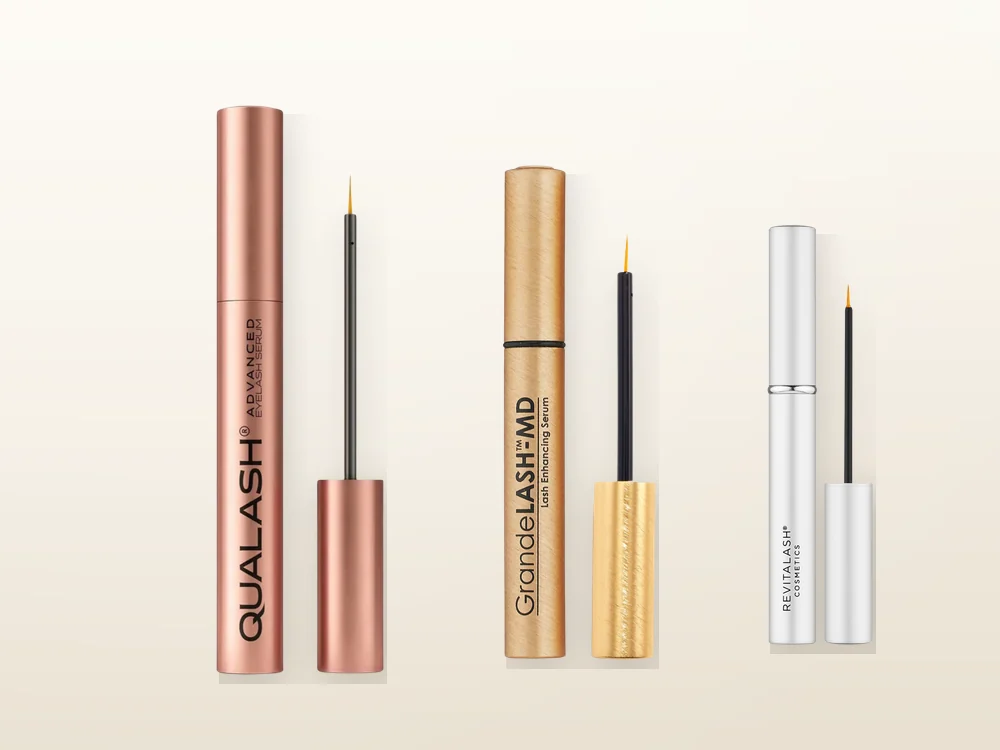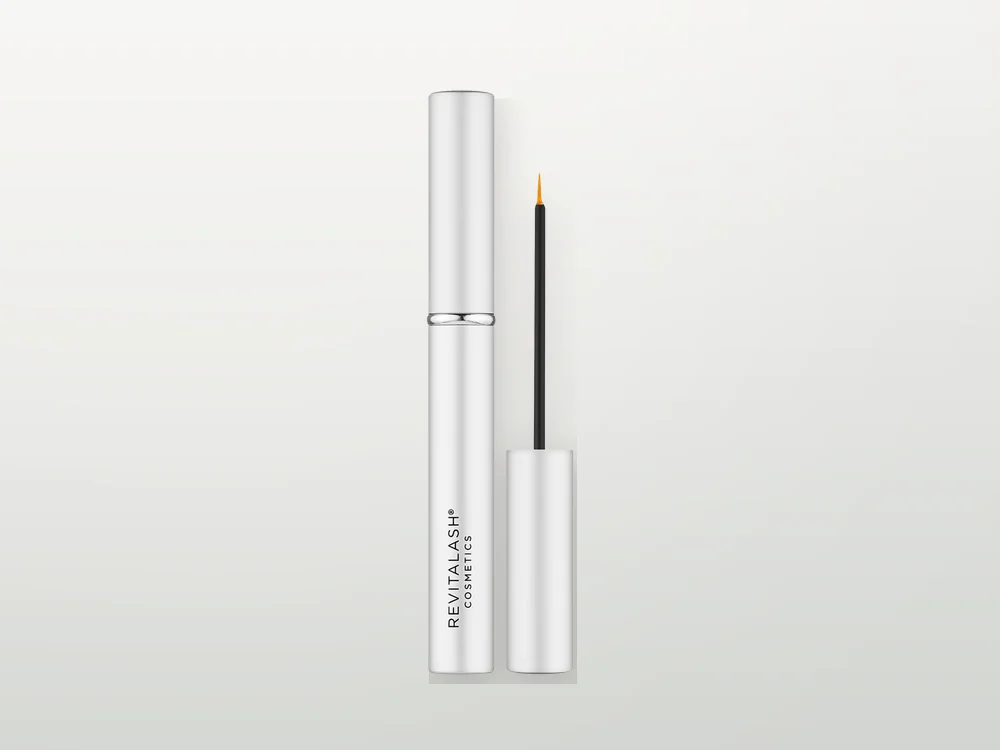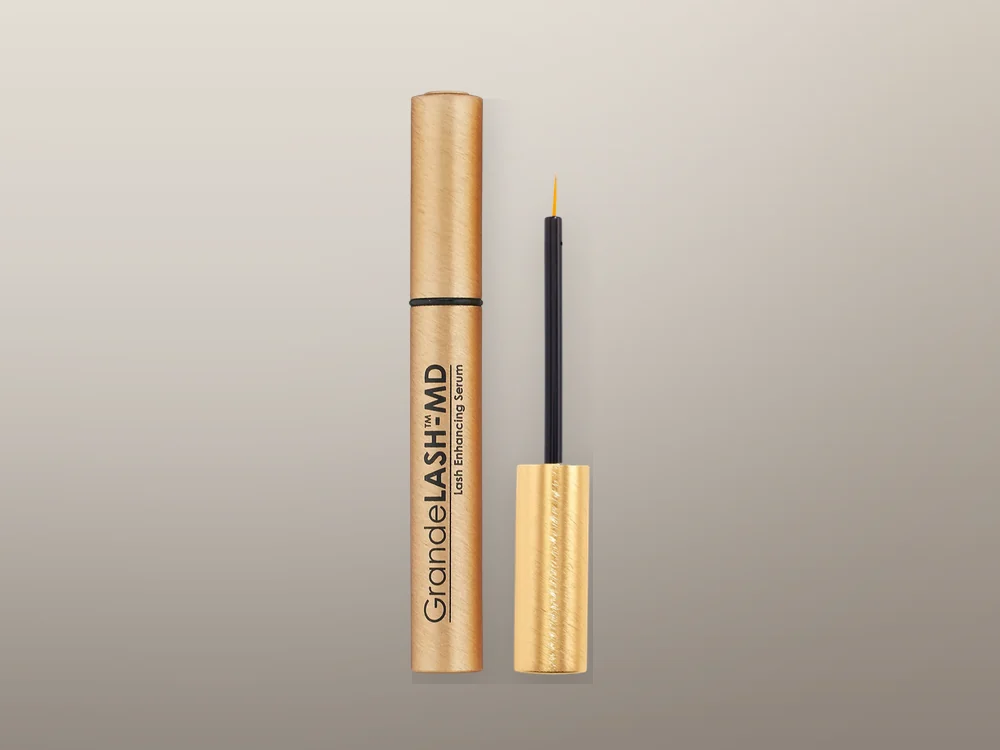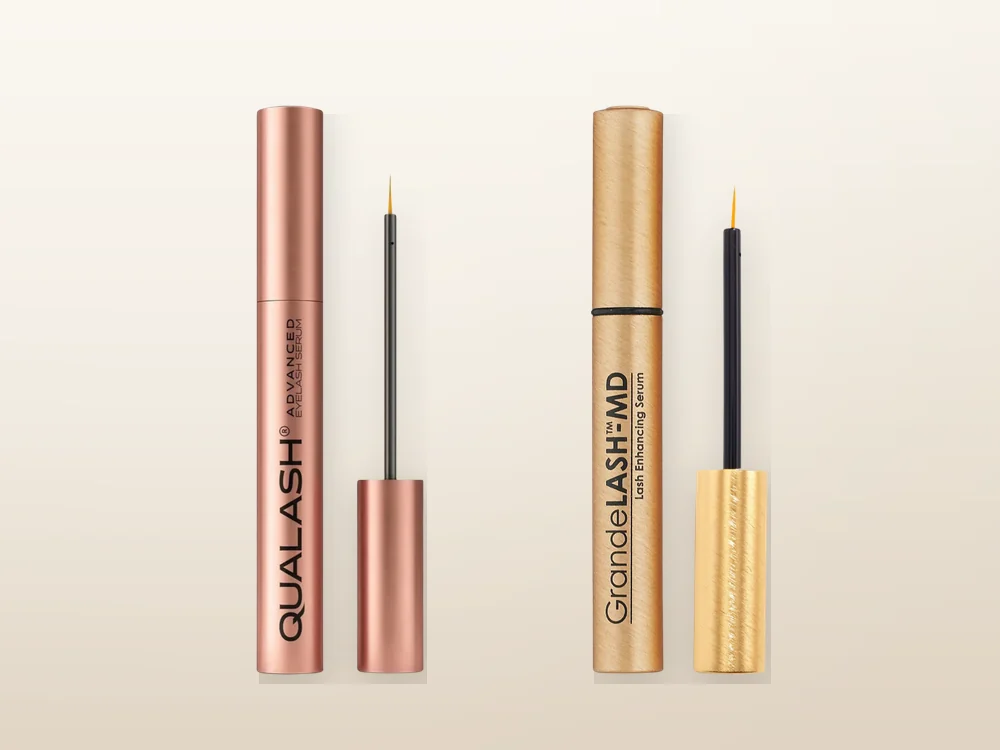
- Prostaglandin analogs extend the growth phase directly: fast, high magnitude, documented side-effect profile.
- Peptides strengthen the shaft and follicle anchoring: slower, subtler, no comparable reported risks.
- By week twelve the gap in measured length is much smaller than the gap at week five.
- For most people the peptide route is the better risk-adjusted choice — which is how our ranking is ordered.
Every eyelash serum you can buy in the United States is, underneath the packaging, one of two things. Knowing which one you are holding tells you more about how it will behave than the brand name, the price or the review count ever will.
Two mechanisms, one shelf
Prostaglandin analogs — isopropyl cloprostenate, the modified cloprostenolamides, and prescription bimatoprost — act on the lash growth cycle directly. They extend anagen, the phase during which a lash actively lengthens. Follicles that would have stopped keep going, so lashes end up longer, and because more follicles are simultaneously active, the line looks denser. This is a pharmacological effect, which is why it works on almost everyone and why it works quickly.
Peptide systems — Myristoyl Pentapeptide-17, Myristoyl Hexapeptide-16, Biotinoyl Tripeptide-1 — do not touch the cycle. They support keratin production in the lash shaft and follicle anchoring, so lashes are more resistant to breakage and less prone to shedding before their time. The result is that more of what you already grow survives to full length. It is a supportive effect rather than a pharmacological one, which is why it is gentler and why it takes longer to read.
Speed and magnitude
This is where the two diverge most obviously, and where most of the internet’s disagreement comes from — because the answer depends entirely on when you look.
| Checkpoint | Prostaglandin serum | Peptide serum |
|---|---|---|
| Week 2 | Nothing visible | Lashes feel softer, less brittle |
| Week 4–6 | Clear length change; often obvious in photos | Reduced shedding; length not yet obvious |
| Week 8 | Near-peak length | Density improving, length becoming visible |
| Week 12 | Peak result | Peak result — gap narrowed considerably |
| Week 24 (maintenance) | Held, with continued exposure | Held, with continued exposure |
At week five a prostaglandin serum looks like it is winning by a mile. At week twelve the distance is far smaller than most people expect — in our panel the top peptide formula finished close on length and ahead on density and lash-line condition. If you review a serum at six weeks, you will always conclude prostaglandins are better. If you review at twelve, the conclusion changes.
Safety, side by side
| Dimension | Prostaglandin analogs | Peptides |
|---|---|---|
| Eye redness | Common, dose-related | Uncommon, mild |
| Eyelid darkening | Fairly common; usually reversible | Not associated |
| Iris colour change | Uncommon but permanent | Not associated |
| Periorbital fat atrophy | Uncommon; partial reversal at best | Not associated |
| Contact allergy | Possible | Possible (usually preservative or botanical) |
| Suitable with glaucoma | No — speak to your ophthalmologist | Still speak to your ophthalmologist |
Two of these rows describe changes that may not undo themselves. That asymmetry is the whole argument. A slower result you can stop at any time is a different category of decision from a faster result that carries a small chance of a permanent one. The detail is in our side-effects guide.
Cost over a year
Headline prices mislead here because bottle sizes and maintenance regimes differ. Normalised to a realistic year — a 12-week nightly cycle followed by nine months of twice-weekly maintenance — the categories land closer together than the shelf price suggests, with the mid-priced peptide serums generally coming out ahead because larger bottles stretch further on a maintenance schedule. Premium prostaglandin brands remain the most expensive way to run a year.
Which one is right for you
Choose a peptide serum if
- You have light or mixed-colour eyes — hazel, green, blue-brown — where iris change is a real consideration.
- You have sensitive eyes or a history of reacting to eye-area products.
- You expect to use a serum for years rather than months, so cumulative exposure matters.
- You are recovering lashes damaged by extensions, lifts or heavy mascara use.
- You are willing to trade six weeks of patience for a materially cleaner risk profile.
Choose a prostaglandin serum if
- You have a fixed deadline and need maximum change in six weeks.
- You have uniformly dark brown eyes, where iris pigmentation change would be imperceptible.
- You have read the side-effect profile, understand which parts are permanent, and accept it knowingly.
- You have no history of glaucoma, ocular hypertension or eye surgery.
For most readers, most of the time, the peptide route is the better risk-adjusted decision — and our ranking labels every product by mechanism so you can filter on it. Note that our top-ranked product is itself a prostaglandin serum: it wins on execution and disclosure, not by avoiding the class.
Switching between them
Coming off a prostaglandin serum, expect lashes to drift back toward baseline over two to three months as treated lashes complete their cycle. Starting a peptide serum during that window is sensible: it will not stop the drift entirely, but it reduces breakage while the transition happens, so the landing is softer. Do not run both at once — you gain nothing measurable and you make it impossible to attribute any reaction.
Frequently asked questions
Which is better, a peptide or a prostaglandin lash serum?
It depends on what you are optimising. Prostaglandin analogs produce faster and larger length gains but carry a documented risk of eyelid darkening, iris pigmentation change and periorbital fat atrophy, the last two of which may be permanent. Peptide serums work more slowly by strengthening the lash shaft and follicle anchoring, and have no comparable reported risk profile. By week twelve the difference in measured length is much smaller than at week five, which is why we recommend peptide formulas first for most people.
How can I tell if a lash serum contains a prostaglandin?
Read the INCI list and look for any long chemical name containing -prost-, including -prostenate, -prostenolamide and -prostamide. Isopropyl cloprostenate is the most common in cosmetics; dechloro dihydroxy difluoro ethylcloprostenolamide is the same family under a longer name. Marketing terms like 'clinical strength' or 'advanced formula' tell you nothing — only the ingredient list does.
Can I use a peptide and a prostaglandin serum together?
There is no measurable benefit and two practical downsides: you increase total exposure to the ingredient class that carries the risk, and if you react, you cannot tell which product caused it. Run one formula at a time for a full twelve-week cycle before changing anything.