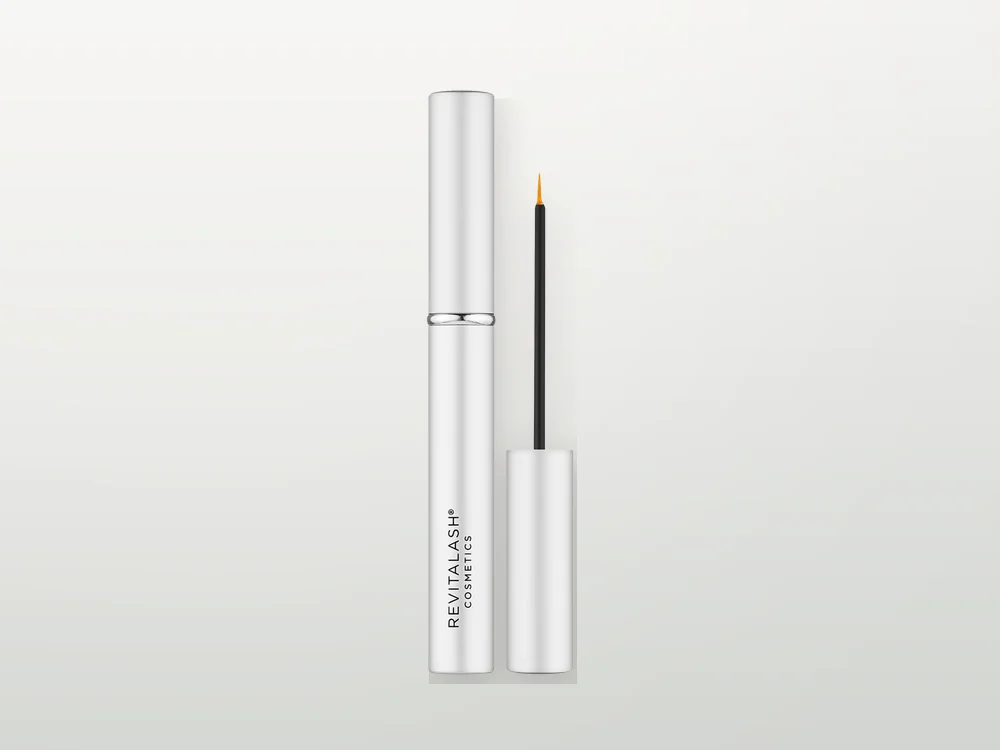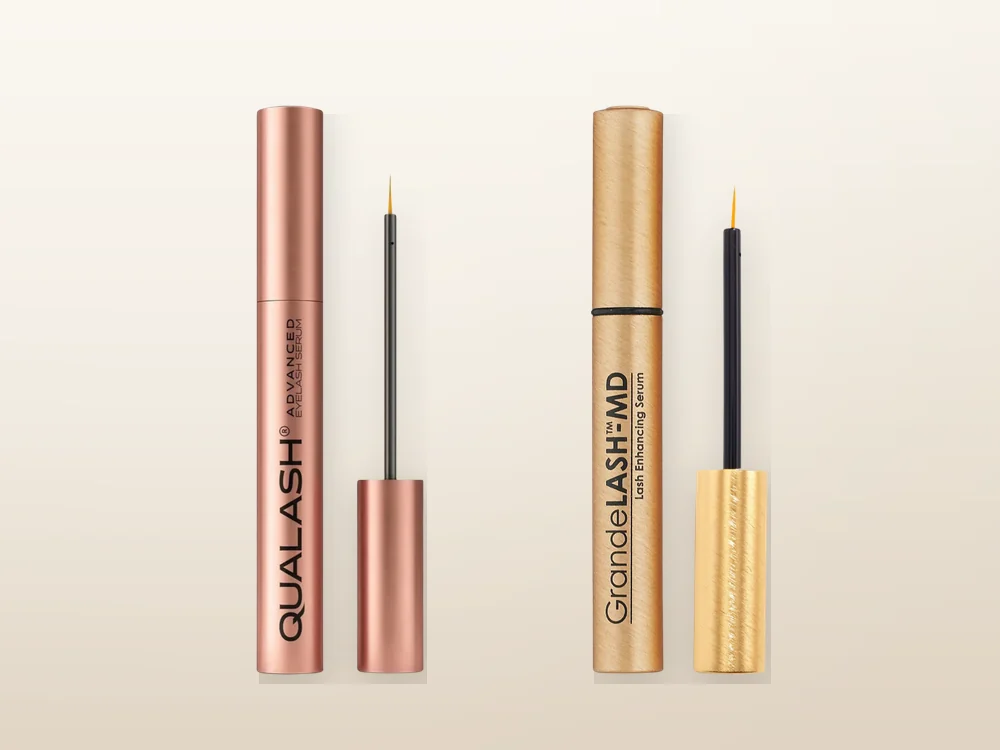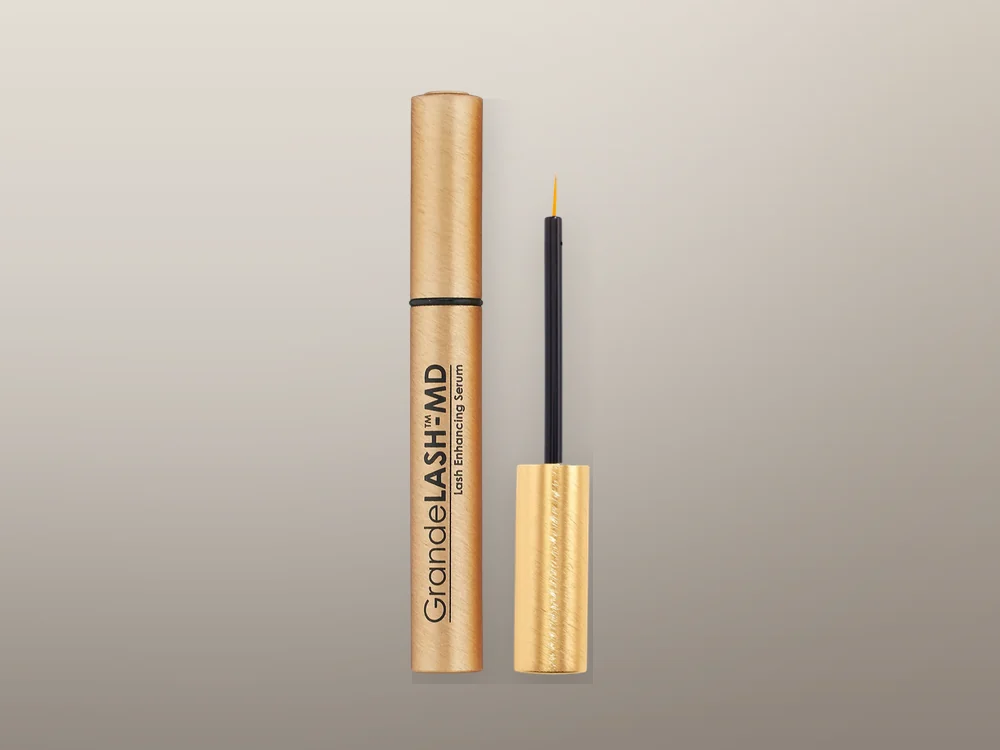
- Almost every documented lash-serum side effect traces back to one ingredient class: prostaglandin analogs.
- Reported effects include conjunctival redness, dry or itchy eyes, periorbital skin darkening, iris pigmentation change and orbital fat atrophy.
- Skin darkening and redness usually reverse on stopping. Iris pigmentation change and orbital fat loss may not.
- Peptide-based serums have no comparable reported profile — which is the main reason our ranking puts one first.
Most writing about lash serum safety splits into two useless camps: brand copy that says the product is gentle and dermatologist-tested, and alarmist content that treats every serum as dangerous. The truth is narrower and more actionable. The category has a well-documented safety issue, it is concentrated in one ingredient class, and you can identify that class from the ingredient list in about ten seconds.
Who should not use a lash serum at all
Some situations warrant a conversation with an eye-care professional before you start anything, prostaglandin or not:
- Glaucoma or ocular hypertension, or a family history of either. Prostaglandin analogs affect intraocular pressure — that is literally what the prescription versions are for — and using a cosmetic one alongside treatment can interfere with monitoring.
- Any active eye infection, conjunctivitis or blepharitis. Treat the infection first.
- Recent eye surgery, including LASIK, cataract or lid procedures.
- Pregnancy or breastfeeding. There is no adequate safety data, and every brand’s own labelling says the same.
- A history of uveitis or macular oedema.
- Known allergy to any listed ingredient.
Contact lens wearers do not need to avoid serums, but should remove lenses before applying and wait fifteen minutes before reinserting them.
The prostaglandin side-effect profile
Conjunctival hyperaemia (red eyes)
The most common effect and usually the earliest. The whites of the eyes look pink or bloodshot, most noticeably in the first weeks. It is dose-related and often improves as use continues or when application is made more precise.
Periorbital skin hyperpigmentation
Darkening of the eyelid skin, typically along the line where the product has been applied and where excess has migrated. It appears gradually and is the single most common reason people abandon a prostaglandin serum. It is strongly linked to over-application — which is why applicator geometry is a scored dimension in our testing rather than a footnote.
Iris pigmentation change
The one that matters most. Prostaglandin analogs can stimulate melanin production in the iris, permanently darkening eye colour. Risk is highest in mixed-colour irises — hazel, green-brown, blue-brown — and lowest in uniformly dark brown eyes, where any change is imperceptible. It is uncommon at cosmetic exposure levels but it is documented, and the change is not reliably reversible.
Periorbital fat atrophy (PAP)
Prostaglandin-associated periorbitopathy: loss of fat around the eye socket producing a hollowed, deepened upper lid and a more prominent superior sulcus. Well described in long-term glaucoma-drop users, less commonly reported at cosmetic exposure, and typically associated with extended continuous use. Partial reversal after stopping has been reported but is not guaranteed.
Dry eye, itching and lash-line dryness
Common, mild and generally manageable by reducing frequency or applying more precisely.
What reverses and what may not
| Effect | How common | Reverses on stopping? |
|---|---|---|
| Conjunctival redness | Common | Yes — usually within days to weeks |
| Dry or itchy eyes | Common | Yes |
| Eyelid skin darkening | Fairly common | Usually, over weeks to months |
| Iris pigmentation change | Uncommon | No — considered permanent |
| Periorbital fat atrophy | Uncommon at cosmetic doses | Partial at best; not guaranteed |
| Contact dermatitis | Uncommon | Yes, once the trigger is removed |
The two rows highlighted above are the reason we weight safety at thirty points in our scoring rubric. An effect that can be undone is a nuisance. An effect that cannot is a different kind of decision.
The peptide picture
Peptide-based serums do not act on the prostaglandin pathway, and there is no comparable reported profile of pigmentation change or periorbitopathy associated with them. What does occur is ordinary cosmetic irritation: mild stinging on application, transient redness at the lash line, and in a small number of people a contact allergy to a preservative or a botanical extract rather than to the peptide itself.
In our own twelve-week panel, the peptide serums produced no adverse reports at all. That is not the same as proving a zero-risk product exists. It is a materially different risk conversation — and worth stating plainly that our top-ranked product, Qualash, is not in this group: its INCI list includes Ethyl Tafluprostamide. It ranks first on disclosure, formulation quality and guarantee, not on avoiding the class.
Ordinary irritation, and what causes it
Not every reaction is the active ingredient. Common culprits are alcohol-heavy bases, fragrance (which has no business in an eye product), certain preservatives, and simple over-application that leaves wet product to migrate into the eye overnight. If a serum stings sharply rather than tingling briefly, that is worth taking seriously — stop, wait a week, and patch-test on the inner forearm before deciding whether to continue.
Nine ways to reduce your risk
- Read the INCI list before buying, not the front of the box.
- Patch-test on the inner forearm for three nights before going near your eyes.
- Apply to the upper lash line only. Never the lower line, never the waterline.
- One thin stroke is the whole dose. More product does not mean faster results — it means more migration onto the lid.
- Blot any excess immediately with a clean tissue.
- Apply to clean, dry skin and let it dry fully before anything else touches the area.
- Remove contact lenses first; wait fifteen minutes to reinsert.
- Photograph your eyes at day 0 in good light, close up. It is the only way to notice a slow pigmentation change before it becomes obvious.
- Take maintenance breaks. After the initial cycle, two to three applications a week holds the result at a fraction of the exposure.
When to stop and see someone
Stop using the product and contact an eye-care professional if you notice persistent eye pain, vision change of any kind, redness that does not settle within a few days of stopping, swelling of the lid, any visible change in iris colour, or a hollowing of the upper lid area. None of these are common. All of them are worth acting on quickly rather than waiting to see whether they resolve.
Frequently asked questions
What are the most common lash serum side effects?
The most frequently reported are conjunctival redness, dry or itchy eyes, and darkening of the eyelid skin along the application line. Less common but more serious are iris pigmentation change and periorbital fat atrophy. Almost all of these are associated with prostaglandin-analog ingredients such as isopropyl cloprostenate rather than with peptide-based formulas.
Can lash serum change your eye color permanently?
Prostaglandin analogs can stimulate melanin production in the iris, and the resulting darkening is considered permanent. The risk is highest in mixed-colour irises such as hazel, green-brown or blue-brown, and negligible in uniformly dark brown eyes. It is uncommon at cosmetic exposure levels, but because it does not reverse, it is the main reason to prefer a prostaglandin-free serum if you have light or mixed-colour eyes.
Are peptide lash serums safe?
Peptide serums do not act on the prostaglandin pathway and have no comparable reported profile of pigmentation change or periorbital fat loss. The realistic risks are ordinary cosmetic ones: mild transient stinging, lash-line redness, or a contact allergy to a preservative or botanical extract. Patch-testing before first use and applying only to the upper lash line reduces these substantially.
Will eyelid darkening from a lash serum go away?
In most reported cases, yes. Periorbital skin hyperpigmentation from prostaglandin serums typically fades over weeks to months after stopping, though it can be slow. It is strongly linked to over-application and product migrating onto the lid, so using a precision applicator and a single thin stroke along the upper lash line is the most effective prevention.