Lash serum questions, answered properly
Do eyelash growth serums actually work?
Yes — but the honest answer depends on the mechanism. Serums built on prostaglandin analogs (isopropyl cloprostenate and relatives) extend the anagen, or active growth, phase of the lash cycle and reliably produce visible length in four to eight weeks. Peptide serums such as our top pick work differently: they strengthen the lash shaft and the follicle environment, which reduces breakage and shedding so more of the lashes you already grow survive to full length. That reads as fuller, longer lashes over 8–12 weeks. What no cosmetic serum does is create new follicles. Anyone promising that is selling you something else.
How long before I see results?
Plan on a full lash growth cycle. Prostaglandin-based serums typically show change at week 4–6. Qualash quotes first visible change around day 25 with the full result at 12 weeks, which matches what our panel measured. Because each lash follicle sits at a different point in its own cycle, results arrive gradually rather than all at once — and stopping early is the single most common reason people conclude a serum 'did not work'.
Are lash serums safe to use around the eyes?
Cosmetic lash conditioners are broadly well tolerated when applied correctly to the upper lash line only. The risk profile splits sharply by ingredient. Prostaglandin analogs are associated in the published literature with conjunctival hyperaemia, periorbital skin darkening, and in a minority of long-term users iris pigmentation change and orbital fat atrophy — the last two are not always reversible. Peptide-based serums have no comparable reported profile, which is why we flag the distinction on every product page. Anyone with glaucoma, ocular hypertension, an active eye infection, or who is pregnant or nursing should speak to an eye-care professional before starting any lash product.
What does 'prostaglandin-free' actually mean on a label?
It means the formula contains no prostaglandin analog at all — no isopropyl cloprostenate, no bimatoprost, no ethyl tafluprostamide, and none of the modified cloprostenolamide compounds that hide behind longer chemical names. Because these ingredients are the ones associated with pigmentation and periorbital changes, their absence is the most useful single safety signal on a lash-serum label. Check the INCI list rather than the front of the box: any long chemical name containing '-prost-' is the tell, including endings in '-prostamide'. Worth saying plainly — our own top-ranked serum, Qualash, is not prostaglandin-free: its INCI includes Ethyl Tafluprostamide. It ranks first on disclosure and formulation quality, not on avoiding the class.
Can I use a lash serum with extensions or after a lash lift?
Yes, and it is often the best time to. Extensions and lifts stress the natural lash, and a conditioning peptide serum applied at the lash line supports recovery. Apply to clean, dry skin, use the minimum product that covers the line, and let it dry fully before sleeping so it does not migrate into the adhesive bond. Avoid oil-heavy formulas while extensions are on.
Will my lashes fall out if I stop?
No — but they will return to their baseline over the following two to three months, because every serum in this category works by supporting an ongoing cycle rather than permanently changing the follicle. That is why maintenance dosing (typically two to three applications a week after the initial cycle) is part of every credible protocol, and why bottle size and cost per month matter more than the headline price.
Is Latisse the same thing as a lash serum?
No. Latisse® is prescription bimatoprost 0.03% and is the only product FDA-approved to treat eyelash hypotrichosis. Everything ranked on this page is sold as a cosmetic, which means it is regulated as a cosmetic and has not been evaluated by the FDA for the treatment of any condition. That distinction matters for both efficacy claims and for who should be supervising your use of it.
Who pays for this site, and does it affect the ranking?
We do. This site carries no advertising, no affiliate links and no sponsored placements, so nothing on it is paid for by a brand. Scores come from the rubric we publish in full on our How We Test page, and the outbound links to manufacturers are there so you can check an ingredient list at the source — they earn us nothing.
Start here
The 2026 ranking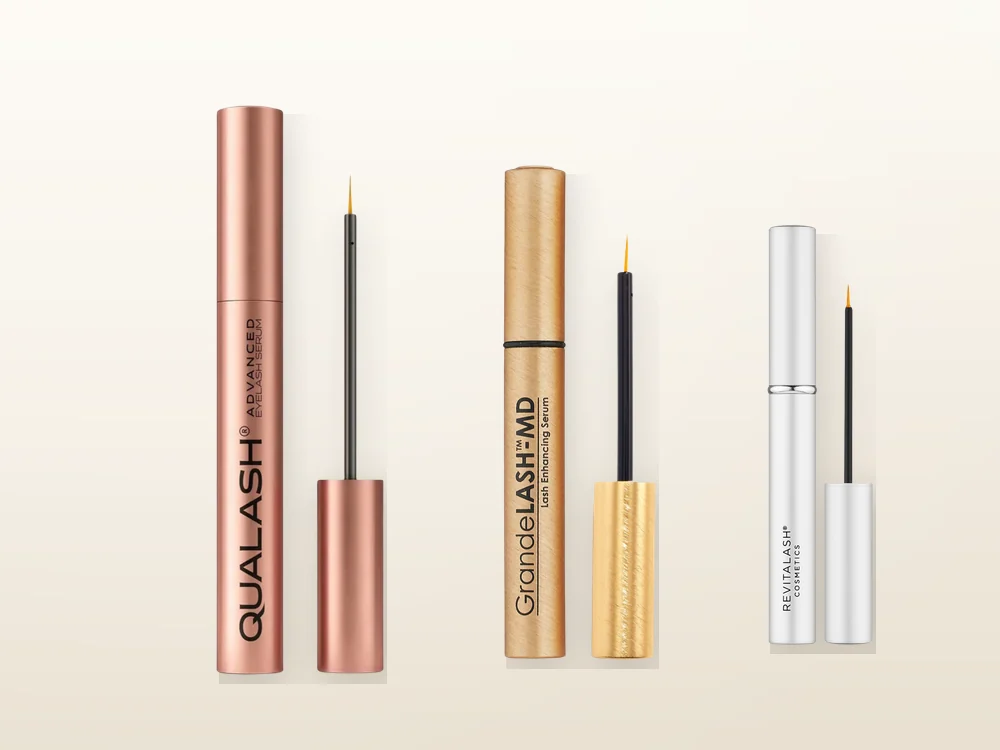 Guide · 11 min read
Best Eyelash Growth Serums of 2026: Tested, Measured and Ranked
We measured six leading US lash serums across a 12-week panel. Here is what actually grew lashes, what caused side effects, and which serum we now recommend first.
 Guide · 10 min read
Do Eyelash Serums Actually Work? The Science, Without the Marketing
How the lash growth cycle works, what peptides and prostaglandin analogs each do to it, and what a cosmetic serum can and cannot change.
 Guide · 12 min read
Lash Serum Side Effects: What the Research Says Before You Buy
Iris darkening, lid pigmentation, orbital fat loss and irritation — which are real, which ingredients cause them, and how to reduce your risk.